How Experiential Retail Technology Increases Shopper Walk-Ins and Dwell Time
Published: July 29, 2026
By: Smart AV Solutions
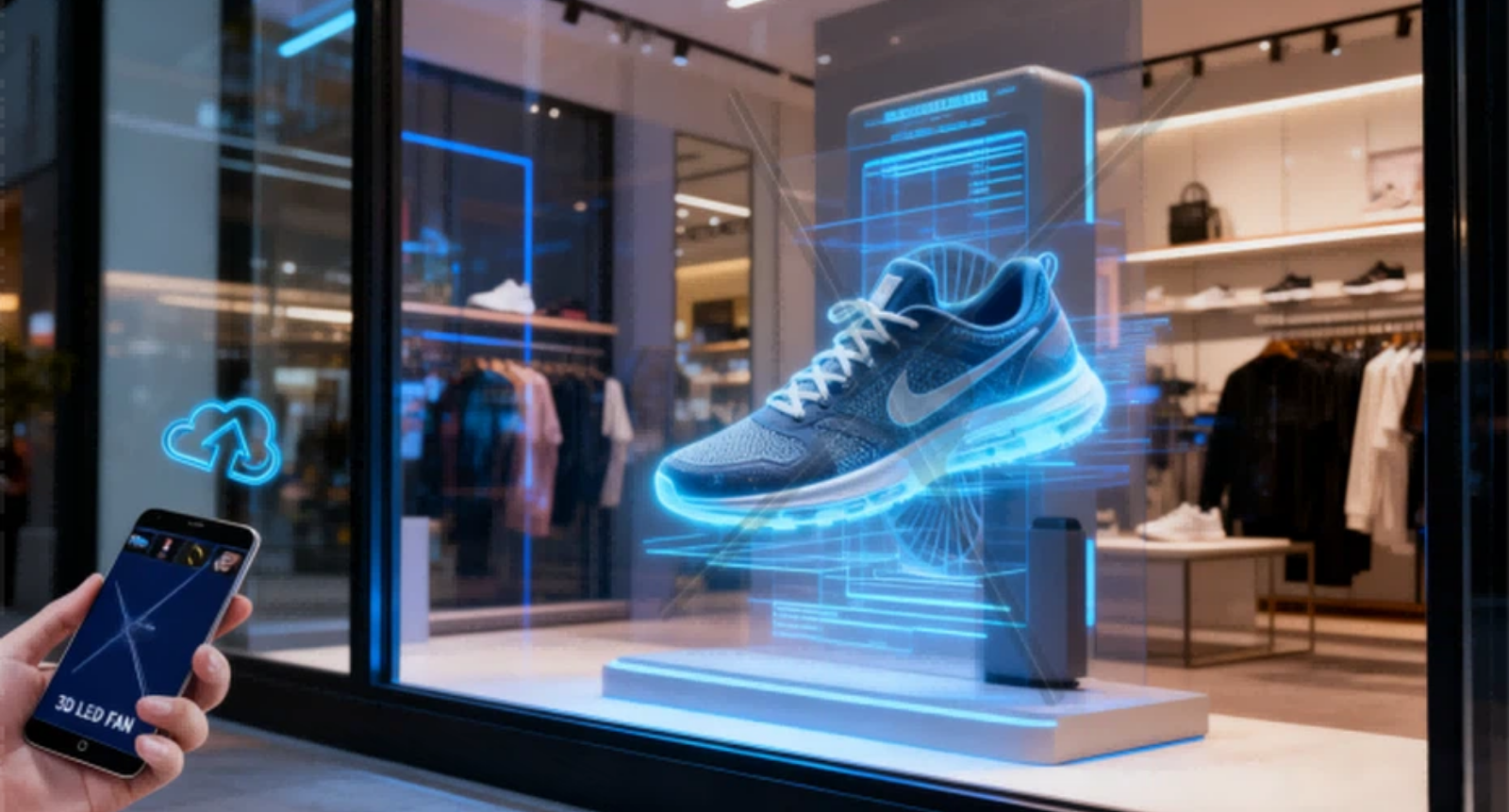
Browse the full Interactive 3D Hologram Fan Display Catalog to compare sizes, hardware specifications, and visual features for your retail space.
While static store displays no longer hold attention, the latest experiential retail trends Singapore storefronts deploy are fundamentally shifting how brands connect with consumers. Modern retail is moving away from passive advertising and toward immersive, physical experiences that actively pull crowds across the threshold.
Among these innovations, 3D hologram fans have emerged as one of the most powerful tools for disrupting the shopper journey. By projecting airborne visuals that break standard environmental patterns, these displays catch the eye from a distance, drive immediate walk-ins, and keep visitors lingering longer once inside. This piece explores the shopper psychology behind these interactive elements, contrasts holographic setups against traditional digital signage infrastructure, and provides a data-backed framework for proving clear installation ROI to your stakeholders.
Why Experiential Retail Works
When evaluating traditional visual merchandising vs experiential retail technology, standard store displays require increasingly aggressive tactics to fight consumer apathy before a shopper even steps inside. Deploying a synchronized 3D hologram fan matrix eliminates legacy presentation constraints, offering massive savings on wasted ad spend and maximizing immediate floor-traffic conversion:
- Visual Attention Capture vs. Pattern Fatigue: A traditional flat display screen setup often demands constant brightness and content shifts to confirm that a retail window can pierce the passive glaze of passing shoppers. Conversely, floating holographic installations bypass this sensory desensitization entirely. The illusion of airborne, three-dimensional hardware units allows brands to break learned visual patterns, significantly accelerating immediate foot-traffic pull and stopping power.
- Elevated Brand Recall vs. Static Signage: A single immersive holographic installation typically boosts customer long-term recall by up to 70% compared with legacy static print alternatives. Traditional signage boards, by contrast, lock commercial spaces into an instantly forgettable backdrop that increases total squandered marketing impressions. This high-impact holographic setup minimizes memory fade and prevents prolonged retention drop-offs among first-time viewers.
- Direct Emotional Engagement vs. Disconnected Novelty: Beyond the simple aesthetic appeal of the display units themselves, the forward-thinking perception needed to capture younger demographics scales experiential value quickly. Because dynamic screen setups require authentic customer connections, standard promotional graphics run a much higher risk of being ignored, whereas shoppers naturally project the premium innovation of a hologram onto your products.
- Strategic Competitive Edge vs. Baseline Landlord Placement: Landlords at ultra-competitive flagship malls, such as Jewel Changi and Marina Bay Sands, increasingly favor tenants who integrate advanced experiential retail trends. Failing to upgrade forces storefronts into worse lease negotiations, whereas a cutting-edge holographic footprint gives brands a massive advantage in securing premium floor positioning and favorable rental terms.

Shopper Psychology Metrics
When analyzing behavioral patterns within experiential retail trends Singapore brick-and-mortar locations must optimize physical touchpoints to influence consumer subconscious actions. Leveraging synchronized spatial hardware rather than flat media grids transforms passing crowds into high-intent buyers by hitting critical benchmarks across the standard three-tier progression of shopper psychology:
- Walk-In Optimization vs. Storefront Blindness: A long-range physical retail display visible from ten meters or more gives moving shoppers sufficient time to register immediate visual curiosity before they have fully passed the physical entrance. Conversely, short-range or poorly angled media boards miss this split-second psychological window entirely. Aligning hardware layout with human sightlines is a central priority within modern experiential retail trends Singapore malls demand to spark foot-traffic interest early.
- Dwell Time Expansion vs. Casual Browsing: An incremental extension of just 60 to 90 seconds of active instore dwell time dramatically escalates the absolute probability that a modern consumer interacts directly with on-site staff or high-margin products. Traditional merchandise layouts, by comparison, struggle to break a visitor’s rapid path through a boutique. Utilizing immersive three-dimensional spatial setups interrupts this transactional rush and deepens emotional brand affinity during their physical stay.
- Conversion Acceleration vs. Basket Abandonment: A sustained period of visual and physical immersion translates systematically into a measurable lift in final purchase conversion rates. This revenue-driving response is especially pronounced when the ambient holographic content showcases the exact physical items stocked in the immediate vicinity of the display array. Connecting dynamic 3D visuals with close-proximity physical product placement completes the path to purchase and secures higher average transaction values.
Case Example: Orchard Gateway Retailer
Real-world deployment data validates current experiential retail trends Singapore brands leverage to transform storefront performance. A prominent footwear retailer installed holographic hardware at its primary Orchard Gateway entrance, measuring clear lift across three core commercial pillars:
- Walk-In Surge vs. Historical Entry Baselines: Store entry metrics registered an immediate 25% volume lift over the previous quarter. This spike proves the power of experiential retail trends Singapore shoppers encounter. The floating 3D visuals successfully pull casual passersby across the threshold.
- Dwell Time Doubling vs. Standard Browsing Durations: Average in-store engagement times doubled from three minutes to six minutes. This prolonged exposure creates more opportunities for sales staff conversions. It anchors consumer attention deeper inside the physical retail footprint.
- Brand Recall Lift vs. Retrospective Memory Decay: Post-visit customer surveys revealed a substantial jump in unassisted brand recognition. Shoppers systematically tied their memorable high-tech entrance experience back to the product. This cements long-term brand equity within a hyper-competitive market.
A Framework for Measuring ROI
When establishing an analytical model within current experiential retail trends Singapore operators must rely on precise, isolated metrics rather than generalized foot-traffic data. Deploying a standardized validation framework removes guesswork from hardware investments, allowing brands to systematically track capital performance across four distinct operational data points:
- Baseline Tracking Data vs. Seasonal Anomalies: Automated retail tracking cameras must gather a minimum of two weeks of historical foot-traffic data prior to initial hardware activation. Conversely, shorter evaluation periods risk yielding heavily skewed performance metrics due to uncharacteristic shopping rushes or temporary local lulls. Establishing a rigorous data baseline ensures that subsequent walk-in growth is directly attributable to the updated storefront technology.
- Proximity Heat Maps vs. Stationary Entertainment: In-store spatial heat maps verify whether crowds are drifting deeper toward merchandise displays or simply clustering around the entrance area. This analytical distinction clarifies if the floating 3D graphics are successfully channeling shoppers toward physical products or merely acting as stationary entertainment. True alignment with experiential retail trends Singapore retailers favor requires converting visual curiosity into active, deep-store product exploration.
- Isolated POS Revenue vs. Diluted Store Sales: Point-of-sale data tracking should isolate the specific product SKUs featured within the active holographic content loops rather than reviewing total store revenue. Evaluating aggregate store performance dilutes the clear financial impact of your targeted visual campaigns. Correlating exact stock movement with localized display runtime yields a hyper-accurate calculation of immediate sales conversion lifts.
- Intent-Focused Surveys vs. Aesthetic Preferences: Post-purchase customer surveys must ask specifically whether shoppers consciously noticed the visual display before deciding to enter the store threshold. Gathering generic feedback about whether visitors found the technology appealing fails to measure true marketing utility. This precise questioning distinguishes an active, revenue-generating walk-in driver from passive, background store decor.
Experiential Retail Checklist for Managers
When executing an in-store installation aligned with current experiential retail trends Singapore commercial teams must standardize their deployment protocols to guarantee consistent shopper engagement. Utilizing a structured operational checklist ensures that on-site management teams properly position hardware and capture essential behavioral data from day one:
- High-Traffic Entrance Placement vs. Isolated Storefront Corners: Retail teams should position synchronized hologram fan arrays directly at primary, high-volume mall entrances. Conversely, tucked-away placements fail to leverage the hardware’s stopping power against passing foot traffic. Maximizing open-corridor visibility is an essential strategy within successful experiential retail trends Singapore flagship boutiques use to capture wider consumer attention.
- Long-Range Airborne Graphics vs. Low-Impact Visual Displays: Marketing managers must deploy floating 3D visuals that purposefully spark shopper curiosity from a distance of ten meters or more. Traditional flat-screen graphics, by contrast, fail to break through standard spatial blind spots until visitors are directly parallel to the window. Projecting clear, mid-air animations creates an immediate, long-distance disruption that naturally pulls moving crowds off their planned paths.
- Automated Camera Tracking vs. Anecdotal Traffic Estimates: Operations teams must track real-time walk-in volume utilizing automated overhead cameras or dedicated entrance sensors. Relying on manual staff headcounts or casual observations yields unreliable performance metrics that compromise post-campaign validation. Continuous digital tracking provides the clean, unfiltered entry data required to accurately calculate true storefront conversion lifts.
- Proximity Heat Mapping vs. Unverified Customer Lingering: Store supervisors should measure localized dwell time adjustments across specific product zones using overhead heat maps. Failing to monitor customer movement leaves management blind to whether shoppers are actively browsing or simply rushing past. Visualizing physical dwell patterns confirms if the holographic installation is successfully holding foot traffic in high-margin departments.
- Isolated Sales Campaign Lift vs. Uncorrelated Revenue Metrics: Financial analysts must compare point-of-sale data exclusively during active content campaigns against identical baseline historical periods. Reviewing generalized monthly store revenue dilutes the measurable impact of specific product promotions. Grounding your ROI analysis in isolated SKU sales lift proves the commercial viability of your interactive merchandising investments.

The Takeaway
When concluding an evaluation of modern experiential retail trends Singapore retail leaders must view interactive installations as behavioral drivers rather than simple aesthetic upgrades. Synthesizing multiple data points allows commercial teams to transform abstract engagement into a measurable financial asset, ensuring that future hardware deployments are backed by definitive proof of performance:
- Behavioral Transformation vs. Superficial Visual Upgrades: Immersive spatial technology like synchronized hologram fans systematically shifts how modern consumers interact with physical environments. Conversely, minor graphic updates or cosmetic store redesigns fail to alter passive browsing habits or stop moving crowds. Investing in dynamic 3D presentation methods fundamentally alters the in-store journey, driving real revenue growth instead of offering static visual decoration.
- Unified Metrics Integration vs. Disconnected Data Points: Retail managers must analyze walk-in volume, localized dwell time, and unassisted brand recall together to build a complete picture of campaign success. Evaluating these essential performance indicators in isolation creates analytical blind spots that fail to show true customer intent. A cohesive tracking strategy provides the clean, multi-layered evidence needed to justify initial capital expenditures to corporate stakeholders.
- Data-Backed Budget Security vs. Speculative Marketing Spend: Establishing an airtight, empirical case for experiential investments allows forward-thinking brands to confidently secure capital for successive rollouts. Relying on speculative results or unverified foot-traffic estimates often leads to budget cuts and stalled modernization plans. Embracing the data-driven framework embedded within successful experiential retail trends Singapore operators rely on guarantees a repeatable path to sustained commercial growth.
Ready to transform your retail storefront into a high-traffic destination? Visit our main 3D Hologram Fan Display product category page to explore our comprehensive, commercial-grade hardware lineup. Alternatively, you can Contact Us Today to schedule our expert Singapore engineering team for a professional, on-site structural consultation and system assessment.

Welcome to Smart AV Solutions Singapore, your destination for smart home solutions. We help you transform your home into a modern and efficient living space with our state-of-the-art products and services. Discover the full potential of a smart home with us today.
Shop Now
Quick Links
Get In Touch
2 Yishun Industrial Street 1, #04-11 North Point Bizhub, Singapore 768159
- Email: sales@techcom.co
- Phone: +65 6677 0000
- Phone: +65 9277 8888
- Hours: Mon-Fri 9:00AM - 5:00PM